What Makes a Website Actually Convert (And Why Most Don't)
Why does your website get traffic but no leads? This guide breaks down the real conversion killers — slow load times, weak messaging, bad CTAs — and what to fix first.

Daniel Kasperczyk
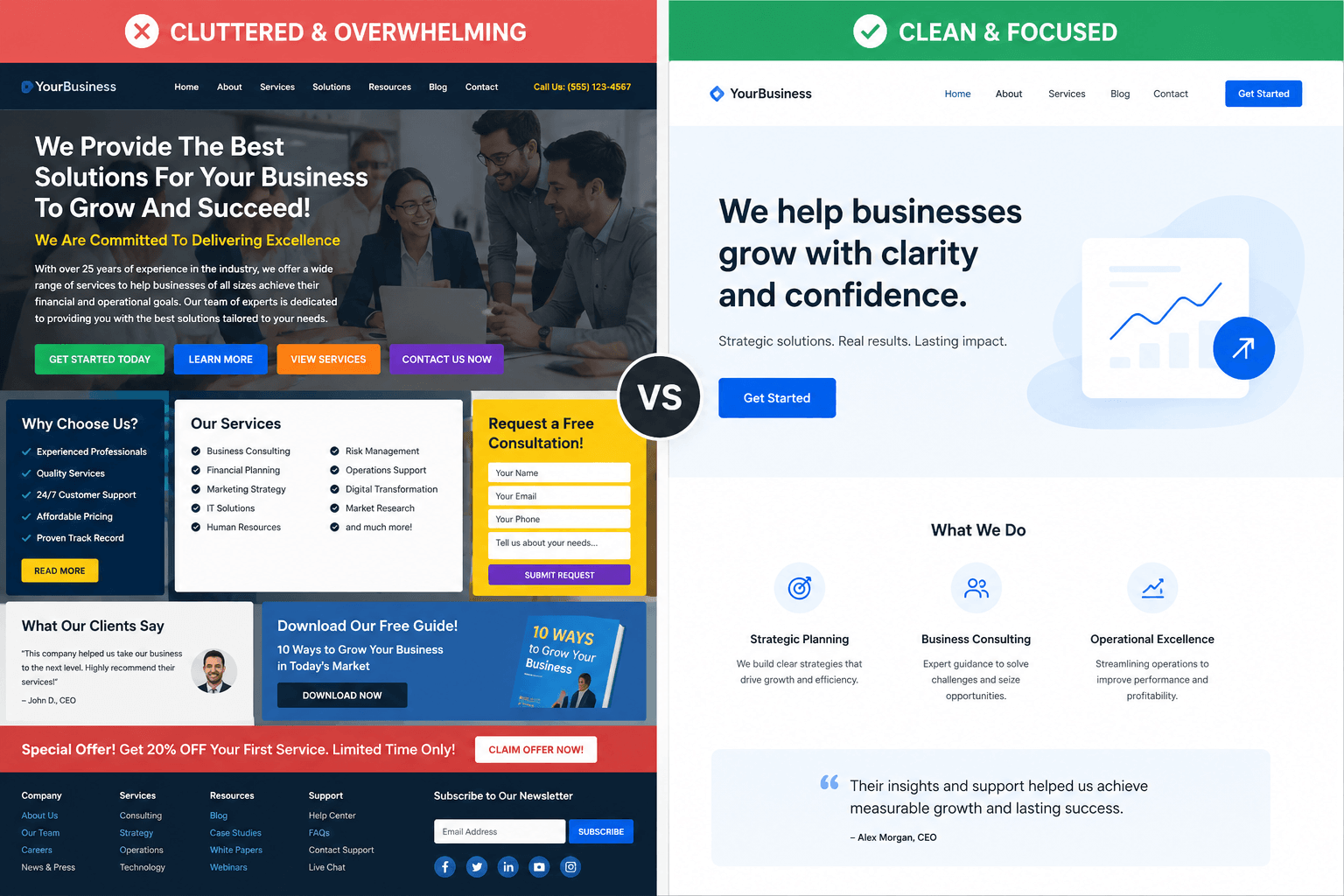
You've probably been there. You launch a website or refresh an old one and then you wait. Traffic comes in. And then... nothing. No calls, no form fills, no enquiries. Just a bounce rate that makes you want to close the analytics tab and go lie down.
The frustrating part is that most business owners have no idea what's broken, because the site looks fine. Sometimes it looks great. The problem almost never lives where you'd think.
What Is a "Conversion"?
Worth being clear upfront: a conversion isn't just a sale. For a local plumber, it's a phone call. For a B2B software company, it might be a demo booking. For a dentist, it's an appointment request. The specific goal changes but the underlying question doesn't: did the visitor do the thing you wanted them to do?

A lot of businesses accidentally optimise for the wrong thing: traffic, time-on-site, pages visited. None of that pays the bills. Conversions pay the bills.
The Moment Someone Lands on Your Page
Within three seconds of landing on your site, a visitor has already made a judgment. Not a conscious one but more like a gut read. Is this for me? Do these people look legitimate?
What drives it:
- visual clarity: is the page easy to scan, or does it throw everything at once?
- relevance: does the headline speak to the visitor's problem, or the company's ego?
- trust signals: a real address, a recognisable logo, a photo of an actual person rather than a stock model. In the absence of these, doubt creeps in fast.
The Message Problem (Most Businesses Get This Wrong)
Here's what never fails to surprise people: the biggest conversion killer on most business websites isn't a technical issue. It's a messaging issue.
Most businesses write their websites from the inside out: who they are, how long they've been doing it, their mission, their awards. None of that should come first. The visitor has exactly one question: what's in this for me?
Lead with the problem you solve. "Struggling to get consistent leads from your website?" lands harder than "Award-Winning Digital Marketing Agency Since 2012." Both might be true. Only one makes the visitor lean forward.
A useful frame from the StoryBrand framework:
If you play the hero, you compete with your customer. Instead, position your business as the guide—like Yoda to their Luke Skywalker—equipping them with the plan and tools they need to overcome their problems and win.
Speed Kills (Or Saves)
Page load time is one of the most documented conversion factors in existence and still consistently ignored.
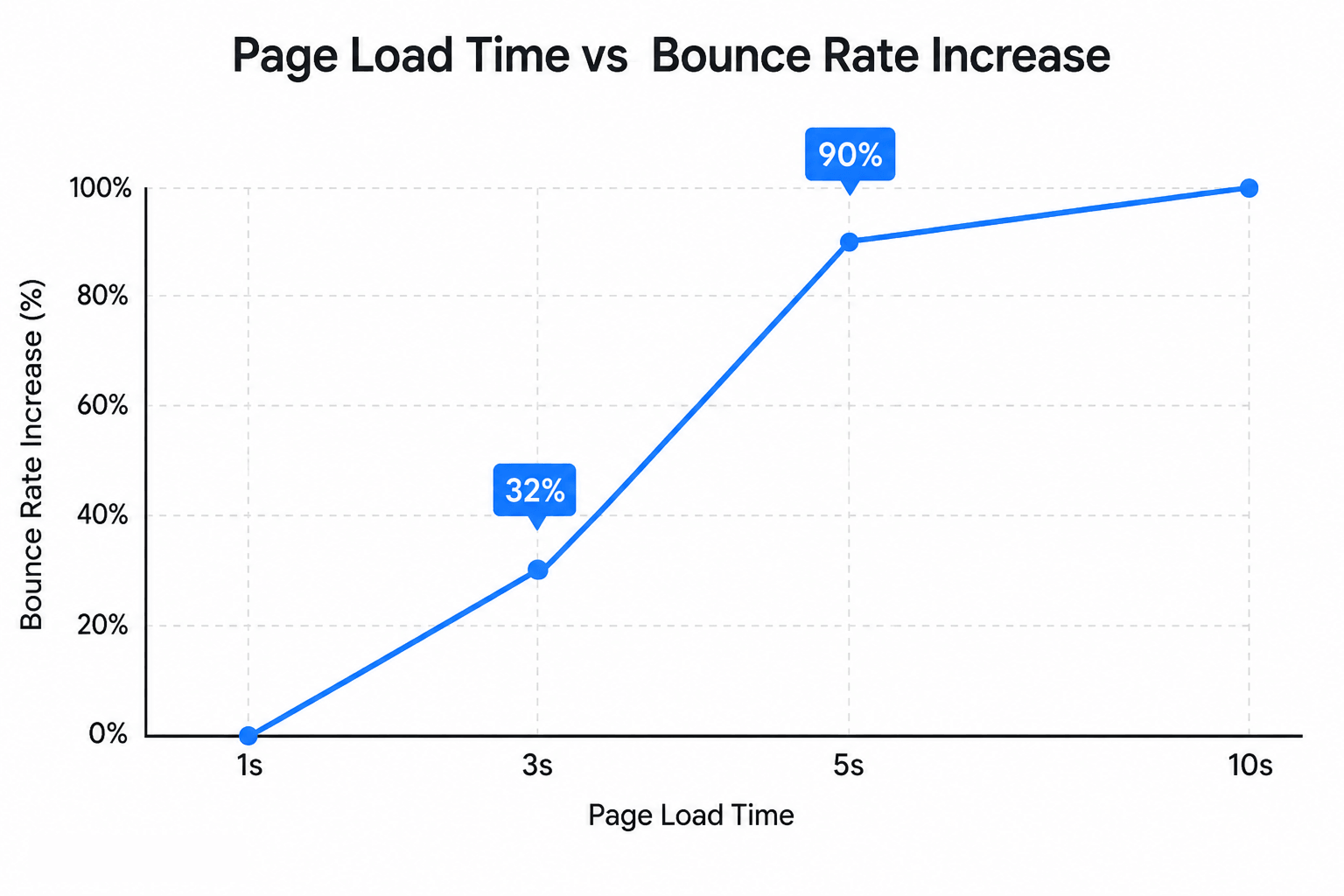
Google's own research shows bounce probability jumps 32% when load time goes from 1 second to 3 seconds. At 5 seconds it's up 90%. A plumber's website with an 8-second load time is quietly handing business to the competitor with a 2-second site.
The tools to diagnose this are free: Google PageSpeed Insights, GTmetrix, Lighthouse. The usual culprits are uncompressed images, too many plugins, and slow hosting. Most fixes are straightforward once you know where to look.
Navigation and Trust: Two Sides of the Same Coin
When people face too many choices, they often make no choice at all. A top menu with eight items is eight chances to go nowhere. Good navigation is ruthless, everything should point toward your contact form, phone number or booking page. A prominent "Book a Call" button in the top-right corner of every page, alone, can measurably lift enquiries.

Trust is the other side of this. People don't enquire from businesses they don't trust and most businesses significantly underestimate how hard trust is to build with a stranger.
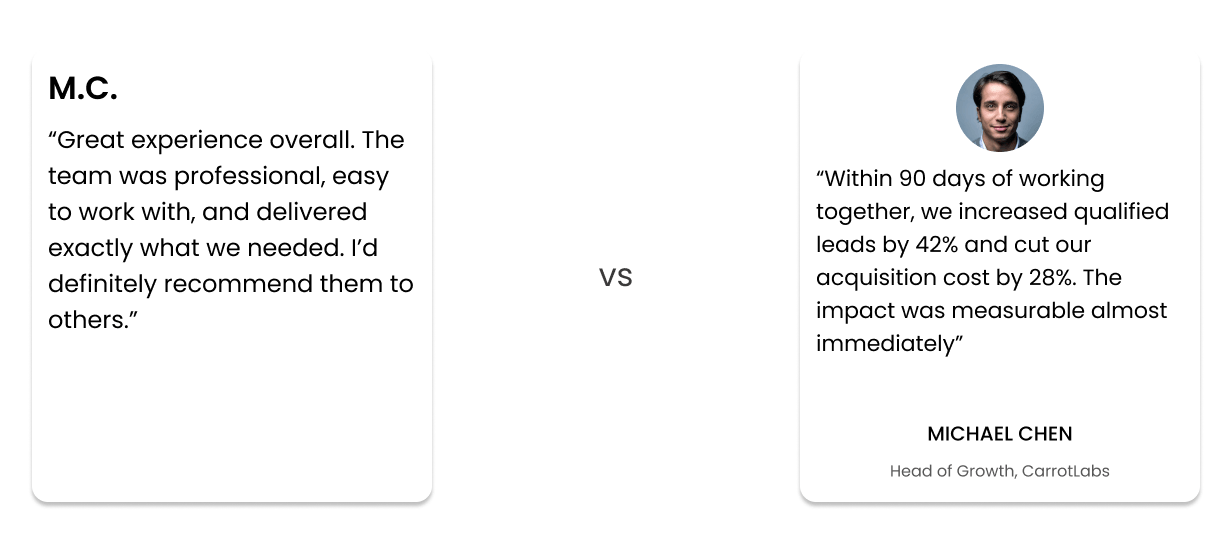
The most powerful tool you have is social proof, and it's massively underused. Not the three-word kind ("Great service! Recommend!") — the specific kind. A real name, a photo, an actual result: "We had 14 new leads in the first three weeks." That's a different animal entirely. For B2B, a case study with real numbers beats a client logo wall every time. For local businesses, a properly maintained Google Business Profile does more quiet work than most people realise.
The Contact Page and What Happens After
A six-field form with a CAPTCHA is a friction machine. Most businesses need two fields (name + email), a clear statement of what happens next, and a phone number in plain text — tappable on mobile. A surprising number of local businesses lose calls simply because the visitor couldn't figure out how to dial.
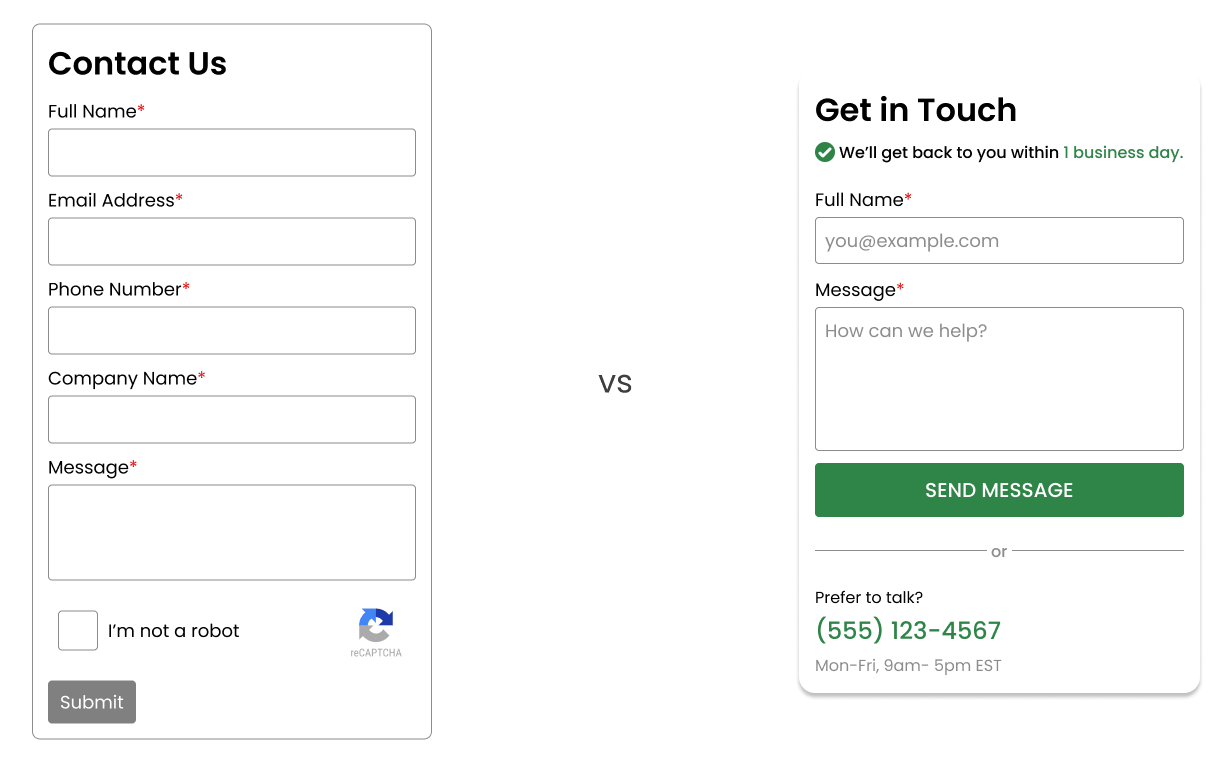
What happens after the form submit matters just as much. A generic "Message sent. We'll be in touch." is a missed opportunity. Tell the visitor exactly what happens next and when. Then actually follow through fast, leads contacted within five minutes of submitting a form convert dramatically better than those left for an hour. If your follow-up process takes a day, you're not in the conversion business. You're in the hope business.
Mobile and CTAs: The Fundamentals That Still Get Ignored
Over 60% of web traffic is on mobile. For local businesses the number is even higher, the person searching "electrician near me" at 7pm is almost certainly on their phone. Open your own site on your actual phone right now. Try to find your main service. Try to get in touch. The friction you feel is real revenue walking out the door.
And even with all of this in place, you can still fail to convert if your call to action is weak. "Contact Us" is technically a CTA. It's also one of the worst. Vague, effort-implying, tells the visitor nothing about what they get. "Get Your Free Quote Today" is better. "Book a 20-Minute Call — No Obligation" is better still. The best CTAs name the action, imply a benefit, and lower perceived risk — all at once.
What a Converting Site Actually Looks Like
It loads fast. It's immediately clear who it helps and what problem it solves. It leads with the visitor's pain, not the company's history. It has specific, credible social proof. Getting in touch is obvious and frictionless on any device. And when someone does reach out, a real response follows quickly.
The gap between a site that converts and one that doesn't is rarely technical. It's almost always a question of whether someone has genuinely thought about what it's like to be a stranger arriving at that page for the first time.
That shift — from building a website about your business to building one for your customer — is where it all starts. If you're not sure where yours is leaking, open it on your phone, read your homepage headline out loud, and ask whether a stranger would immediately know what you do and why they should care. If there's any hesitation, you already know where to begin.